
16/07/2020

After enjoying the perfect bacon and avocado on toast for breakfast, we set off for Pearl Bay. J pulled up the anchor all by himself, raised the mainsail and slowly sailed out of the small bay. At first, wind was a bit confused, and the goose wings kept flapping. We might be in the wind shadow caused by coastal cliffs. After a while, wind gradually began to stabilize, and the waves from behind helped to push the boat.

Sitting on the stern of the boat basking in the sun, I saw another sailing boat approaching us in distance, getting closer and closer. J took a binoculars had a look and said that boat only had its main sail but flapping. We had two sail up sailing at good speed how come they were faster than us, they must have started the engine, the main sail was just a decoration, we call it cheating. Later, they surpassed us and entered the entrance of Pearl Bay in front of us.

Before 2pm, it was our turn to enter the bay entrance. It was only about 150 meters wide and we had to go against the wind. We made a few nice tacks and entered smoothly, and we stopped right beside the cheating boat. The entire process of anchoring was controlled by wind without using the engine too, just to show them what is real sailing and who is real sailor. After showing off skills and feeling proud, we had yummy vegetable pancakes while admiring the view of Pearl Bay, watching the birds flying, fish and turtle swimming, as a reward for not using the engine whole day.

For dinner, I made braised pumpkin with veggie protein mince, add a spoonful of Lao Gan Ma black bean chilli paste when marinating minced meat, and it was another good meal to go with rice.

15/07/2020

At 7:30 this morning, we left Great Keppel Island and continued heading north. Wind was good at first, blowing from the southwest, and the boat sailed at a speed of about four knots. At noon J was washing the bucket at the stern. The edge of the bucket broke and fell into the water. He had to turn the boat to rescue it. We circled around the bucket twice and finally picked it up. Good thing was we practiced how to rescue a person overboard. But after returning to the course, wind dropped. The boat went slower and slower. Put on spinnaker at port side, at first it was a little bit better, but then it collapsed from time to time, like a dried mandarin peel. We tried it on starboard side, and not making much difference. Our Original plan was to go to Pearl Bay, but it seemed that we had to shorten the course and anchor nearby.

After bypassing a small island, we entered a small bay before five o’clock and dropped anchor in front of a little beach for a rest. We only sailed less than 30 nautical miles in eight hours, not much faster than a sea snail, but it was always pleasant sailing in the blue sea and under the blue sky.

For dinner, we had spaghetti with veggie protein and Salami as mince. Now I am very good at boiling spaghetti without wasting any water. The secret is that you don’t need to add too much water to the pot, just cover the noodles, sprinkle salt(or a bit sea water), bring to boil and add spaghetti (I use the thinnest type it is called vermicelli), boil for a minute or two, remove from stove with the lid on, and start making sauce. When the sauce is cooked, the spaghetti have absorbed almost all the water and the texture is just right. Add them into the sauce and serve. It saves water and gas this way, which is suitable for life at sea with limited resources.

You still want to write a journal even in food coma(too full from dinner). I read Robin Knox-Johnston (the first person who sailed around the world non-stop) before. He said that writing a journal every day had became the mainstay of his existence in such a long lonely voyage. He’d usually down tools at 5pm for a beer and write. It become a comforting routine, a ritual. Writing each day helped him stay sane, even when water is pouring in through the skylights, he just had to do it, if only the barest of description. But there are too many amazing scenes on the sea that are indescribable. He said he wish he could paint.

Since I started this boat life, I formed a habit of writing journals. It may be that there are too many interesting things happening every day compared to the past that I need to express and want to share with my relatives and friends. I found it quite interesting reading my old journals too. I don’t know how many people still keep this habit. This traditional procedural recording method may have been replaced by photos, videos or a few words on social medias. They seem to be abundant but they are only fragmented, and they are not as complete as composing a longer article to explain the context. Of course, there might still be many people writing diaries but they don’t share like what I did. After all, the intention of writing diaries is not to expose.

14/07/2020

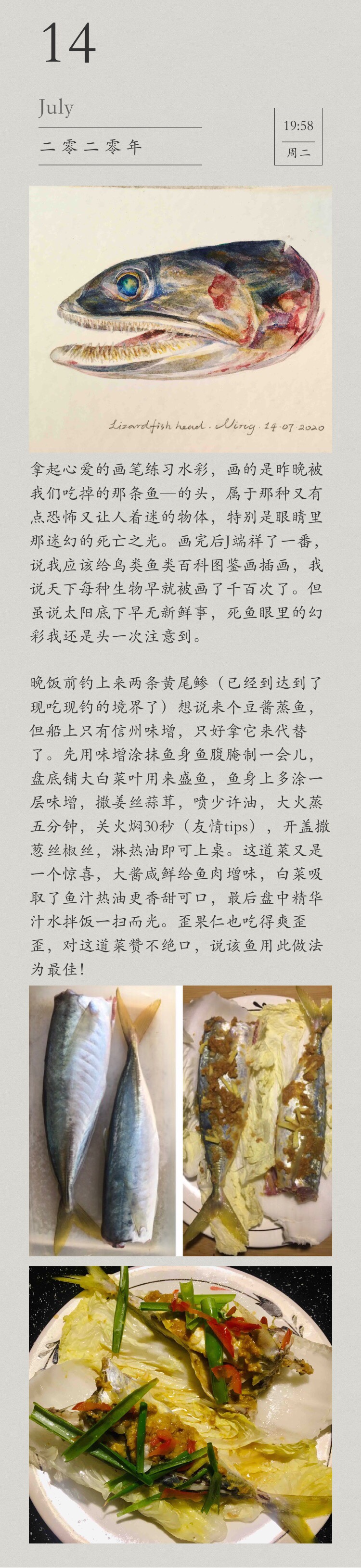
Picked up my favourite paintbrush I practiced watercolour. The subject is the head of the fish we ate last night. It is kind of scary but fascinating object, especially the psychedelic light of death in the eyes. After the painting was completed, J looked at it and said I should do illustrations for Encyclopedia of birds and fish. I said that every creature in the world has been illustrated thousands of times. There is nothing new under the sun, but it is the first time I noticed the mesmerising colours in the eyes of dead fish.

I caught Two yellowtail scads just before dinner, so it’s very fresh daily catch. I want to make a traditional steamed fish dish with bean paste, but we only have miso paste in our boat, I assumed they taste similar so I used miso instead. Firstly apply the miso to the fish body and marinate for a while. Cover a plate with wombok cabbage leaves, place fish on top, coat with another layer of miso, sprinkle with ginger and garlic, spray with a little bit of oil, steam for five minutes, turn off the heat cover for 30 seconds (friend’s tips), open the lid and sprinkle with scallion and red peppers, pour hot oil on top to serve. This dish is another surprise. The salty and fresh taste of miso enhances the flavour of the fish. The cabbage absorbs the fish juice and hot oil to make it sweeter and more delicious. At the end, blend the rest of sauce with all the goodness to rice and serve. J loved this dish, saying this is the best way to cook this fish so far!